
Museums and Ai
Dearest reader. Recently I was sitting on a NMBS/SNCB train, just minding my own business, looking out of the window and occasionally glancing at the passenger information screen. Suddenly an ad for Trainworld (The Train Museum at Schaerbeek station) popped up which used the following image:
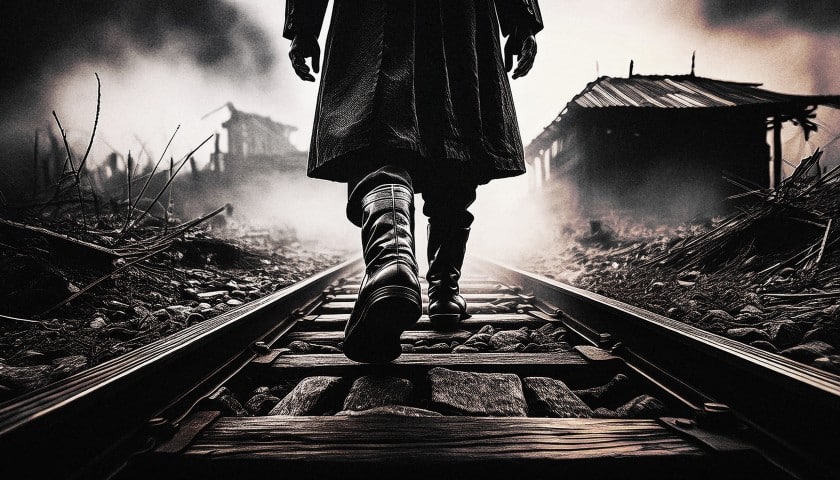
Apart from the obvious safety-related issues with this action, I had a personal issue with this image. To me, a trained artist, this image was immediately obvious as an Ai-generated image. It makes a poor attempt at single point perspective and the lighting and shadows make no sense at all. Beyond that the image also make a few errors which can be spotted if you know anything about railways.


The second tell can be seen in the damage caused by the wheel friction caused on the track. Here the wheels seem to have carved many tiny grooves into the steel rails, this is inconsistent with what actual wheel friction damage looks like. The constant usage of a train actually creates a singular nice stripe of polished steel rail visible both in stand still and at speed. (see images below)


The third way to tell this image is Ai-generated is by the very strange railway screws in the image. Today the Belgian railways use Pandrol clips to tie the track to the sleeper as visible in the previous image of train track. In the past however, railways used bolts and screws to tie down the tracks to sleepers. The computer made a poor attempt at trying to generate these kind of spikes. But is extremely inconsistent.

So the image I must conclude is Ai-generated. "So what?", you may think. Usage of Ai is commonplace these days, for some reason everyone uses it. Apart from the fact I want to poke my eyes out everytime I observe one of these poorly generated monstrosities, there is a larger issue here. Trainworld in Schaerbeek is a museum. Looking past the ecological and moral arguments against the use of Ai, the point of Museums is to be a centre of knowledge about a subject. But how can a museum claim to be a centre of knowledge on anything if it allows mistakes like these to pass? On top of that, this image was used to promote an exposition about the railway's involvement during the second world war. Were they unable to find any historical pictures of this event in the various archives? I find that highly unlikely! And if the point of this image is to censor the horrors of war, then this is simply censorship. So if the purpose of a museum is to promote, share and advance the knowledge of it's subject than Trainworld has failed to properly follow this purpose.
Trainworld must rectify this mistake, the ultimate wish of this article is the complete removal of this image both in the museum and in all promotional material. I would also like to hear the reasoning behind this baffling decision.
So what should they have done? The answer is quite simple, if you want to promote an exposition, then you use the images from the exposition. Or if you want to create something new for the promotion you could have it be done by an actual human artist. In 2021 there was a small exhibition at Muntpunt in Brussels, the theme of the exhibition was "The Renaissance of the Night Train in Europe", this exhibition was organised by Back on Track Belgium, a collective looking to promote and improve night train connections in Europe. To that end they organised a context for artists to come and create posters that promote night train travel. This is an effective way to promote the work you're doing and it adds to the exhibition. I think a contest like this, with the theme of trying to reconcile a part of the railways history, would have actually added something to the exposition.
And NMBS/SNCB seems to know this too. On the first of September 2026, the Belgian Railways will celebrate it's 100 years of existence. Despite the bleak future of the organisation, this will be a moment of celebration! Therefore they are doing a fun little art contest for students, I am very much looking forward to the results. Though I do fear they haven't promoted it enough.

Occasionally I think about three years ago, when people still wrote their own things and payed artists for their images. (luckily I don't check my spelling enough, so you can tell that this wasn't written by Ai) And maybe in the future, people will stop using it, and museums will go back to paying artists. But for now I will have to live with occasionally being flashed with that horrible Ai-image whenever I am on a train.
I did actually sent a complaint email to the museum asking to clear up why they decided to do it. To which I received the following reply. Beneath I provide you with the Museum's untranslated reply, and a translation provided by me
Original:
Beste [mijn naam],
U hebt helemaal gelijk als u zegt dat deze afbeelding door AI gegenereerd is. Naast de duidelijke fouten die u opsomt, zijn er zeker nog andere. Zo zal voor kenners ook de kledij van de soldaat vermoedelijk niet overeenstemmen met de werkelijkheid.
Waarom de keuze voor AI?
- We werken bij NMBS bij voorkeur met echte beelden, alleen als we in onze archieven de juiste foto niet vinden, zullen we AI inzetten. Dat was zo voor deze expo, waar we over een heel gevoelig onderwerp praten. We zochten een beeld dat de juiste sfeer weergaf, maar niet te realistisch was, vergelijk het met een affiche voor een film. AI bleek dit het vlotst te kunnen oplossen.
- U suggereert dat dit snel realistisch kan gefotografeerd worden, maar een professionele fotosessie opzetten, met de juiste kleding en de juiste decorstukken, belichting, enz. zou al gauw meerdere duizenden euro’s kosten. In dit geval ontbraken niet enkel het budget maar ook de tijd om zulke productie op te zetten. Idem voor het aan het werk zetten van een illustrator. Mocht dit mogelijk geweest zijn dan hadden we ongetwijfeld die oplossing overwogen. François Schuiten heeft immers in het verleden al affiches ontworpen voor de expo’s in het museum.
- De affiche is een communicatiemiddel dat geen realistische weergave pretendeert te zijn. In de expo zelf gebruiken we uiteraard enkel realistische beelden en geven we een correct beeld van het verleden.
- AI heeft een nadelige impact op het milieu en we gebruiken dan ook enkel AI na grondige overwegingen. Helaas zijn er miljoenen social media-gebruikers die dag na dag onnadenkend AI inzetten om de meest banale fotomanipulaties te genereren. Het besef dat AI een zware ecologische voetafdruk genereert is du zeker niet overal aanwezig.
We gaan in dit geval de afbeelding niet vervangen, de meeste communicatie is achter de rug dus dat zou nog weinig impact hebben. We danken u in elk geval voor uw opmerkzame mail en we kunnen u al verzekeren dat voor onze eerstkomende expo met een authentieke foto wordt gewerkt voor de affiche.
Vriendelijke groeten,
English Translation:
Dearest [my name]
You are completely correct when you say that this image is generated by Ai. Next to the obvious mistakes you surmised, there are definitely others. For people with knowledge of soldiers clothing too it will obviously not look like reality. So why did we choose Ai?
- We prefer using real images, only when we do not find the right image in our archives will we use Ai. This was the case for this expo, where we discuss a touchy subject. We sought an image that gave the right impression, but wasn't realistic, compare it with a movie poster. Ai was the quickest solution.
- You suggest that this could be swiftly photographed, but setting up a professional session, with the correct clothing, decor, lighting, etc. could quickly cost thousand's of euro's. In this case we lacked both a budget and the time to set up such a production. The same was true with hiring an illustrator. If it had been an option we would have undoubtedly pondered the possibility. In the past François Schuiten has designed many posters for our expo's.
- The poster is a method of communication that does not pretend to be a realistic image. In the expo we only use realistic images that give a correct view of the past.
- Ai has a negative impact on the environment and we only use Ai after careful consideration. Sadly, there are millions of social media users using Ai day in, day out, for the most banal of photographic edits. The realisation that Ai has a heavy ecological footprint is not omnipresent.
Friendly greetings,
I am not completely satisfied with this answer, it sounds like they chose this picture because they were scared to use actual material, but also because the entire expo might have been rushed out. On top of being rushed it sounds like the museum is running on a low budget. Some time ago Trainworld had a fraud scandal and the entire museum was subsequently absorbed into NMBS/SNCB. The railway company itself is suffering huge budget cuts by the government, all that to say that NMBS/SNCB is not having a good time. This might have affected Trainworld which eventually resulted in the museum having to rush out an expo without putting much effort into the marketing side of things. However the email ends on a positive note, they promise to use an authentic picture for the next expo. We shall have to see if this promise is kept.

Reacties
Een reactie posten